About printing
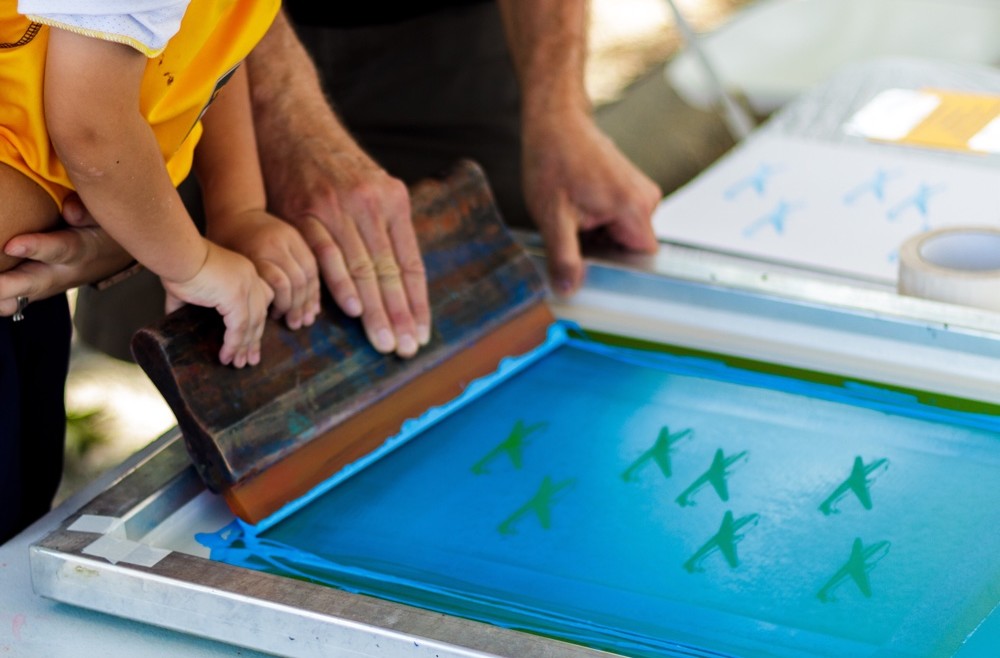
First of all, through various input means (scanner, digital camera, etc.), the required pattern is input to the computer, or through the designer directly on the computer design, after the computer printing color separation system (CAD) editing processing, and then by the computer controlled inkjet mechanism directly spray dyes (active, disperse, etc.) on the fabric printing.No screen spray printing is just suitable for small batch, fast delivery needs, especially suitable for orders within 1000 meters.
3.Active printing
In the process of dyeing and printing, the active groups of reactive dyes form a combination with fiber molecules, so that the dyes and fibers form a whole, so that the fabric has excellent dustproof performance, high cleanliness, and does not fade for a long time. Printing dyes are processed by active printing and dyeing. The design elements of active printing are diverse: plants and flowers, geometric figures, English letters and different color blocks are organically combined to show different design styles through design techniques. This kind of fabric ADAPTS to a wide range of groups and is suitable for a long time. The fabric of active printing has bright color, good color fastness and soft feel. It can be washed regularly without fading and used as new as long time.
Reactive printing: Printing using reactive dyes infiltrated into fabrics
Paint printing: Printing by using paint over fabric
4.Flocking printing
A product that uses high voltage electrostatic field to plant staple fibers on grey cloth, that is, an adhesive is printed on the substrate surface, and then a certain voltage electrostatic field is used to vertically accelerate the staple fibers to be planted on the grey cloth coated with adhesive.
5.photographic printing
With ordinary ink or pigment ink printing patterns on special paper, through the heat transfer machine at a certain time heating, heat transfer system on a layer of gum heat melt stick on the clothes, Korean hot stamping is generally used for heat transfer cotton fabric, high production process efficiency, low cost, water resistant, high temperature and heavy pressure hot printing, can be small or more hot printing, more time saving.
6.Foaming printing
The printing pulp used is foamed pulp. After heating or standing, the printing surface will bubble and rise rapidly, forming an obvious three-dimensional sense and elastic, just like foam sponge products. Athleisure and casual fashion are often used. As with ordinary screen printing, the color can be randomly mixed. Foaming printing does not require much of the fabric of clothing, and is suitable for almost all outerwear clothing.
7. 3D silicone printing
Heat transfer printing 3d silicone clothing is characterized by setting a buffer layer on the upper layer of the clothing surface layer. The buffer layer is reheat transfer printing a layer of silicone layer, which is made of EVA or foam material. The invention provides a 3d silicone layer on the clothing surface layer. The 3d silicone layer can be patterns or various logos to achieve striking visual effects. It also improves the wear resistance and skid resistance of the clothing and strengthens the product quality. A buffer layer is set inside the silicone layer to play the role of buffer protection, to avoid wear or injury after being hit or hard object collision.
How to Find a Clothing Manufacturer for Startups? How can factories and businesses achieve a win-win situation?
About Embroidered
Related Article